How to Open a Bottle of Sparkling Wine Safely and Elegantly
Opening a bottle of sparkling wine is an art that combines skill, precision, and safety. Sparkling wines are under pressure, so handling the bottle correctly is essential to avoid accidents and preserve the wine’s effervescence. Follow these step-by-step instructions to open your bottle like a professional.
1. Chill the Bottle Properly
Aim for 7–10 °C (45–50 °F)
-
Sparkling wine bottles are highly pressurized. Chilling the bottle reduces internal pressure and minimizes the risk of an explosive cork pop.
Use an ice bucket or refrigerator
-
Place the bottle in the fridge for 3–4 hours, ideally on a cold shelf.
-
For quicker chilling, use a 1:1 mixture of ice and water in a bucket and submerge the bottle for 20–30 minutes, rotating once or twice.
Avoid overchilling
-
Do not freeze the bottle. Freezing risks cracking the glass or premature cork ejection.
2. Secure a Safe, Stable Surface
Choose a sturdy surface
-
Use a solid, flat counter or table.
Clear the space
-
Remove fragile items, electronics, or anything flammable from around the bottle.
Keep a towel or napkin handy
-
Useful for catching the cork or wiping minor spills. It also protects your hand from foil or wire edges.
3. Peel Off the Foil
Grip and loosen the tab
-
Pull the perforated tab down to remove the foil in one clean motion.
Tilt the bottle slightly away from you
-
This directs any unexpected drips away from you or your countertop.
Inspect the top
-
You should now see the wire cage. Brush away any leftover foil or debris.
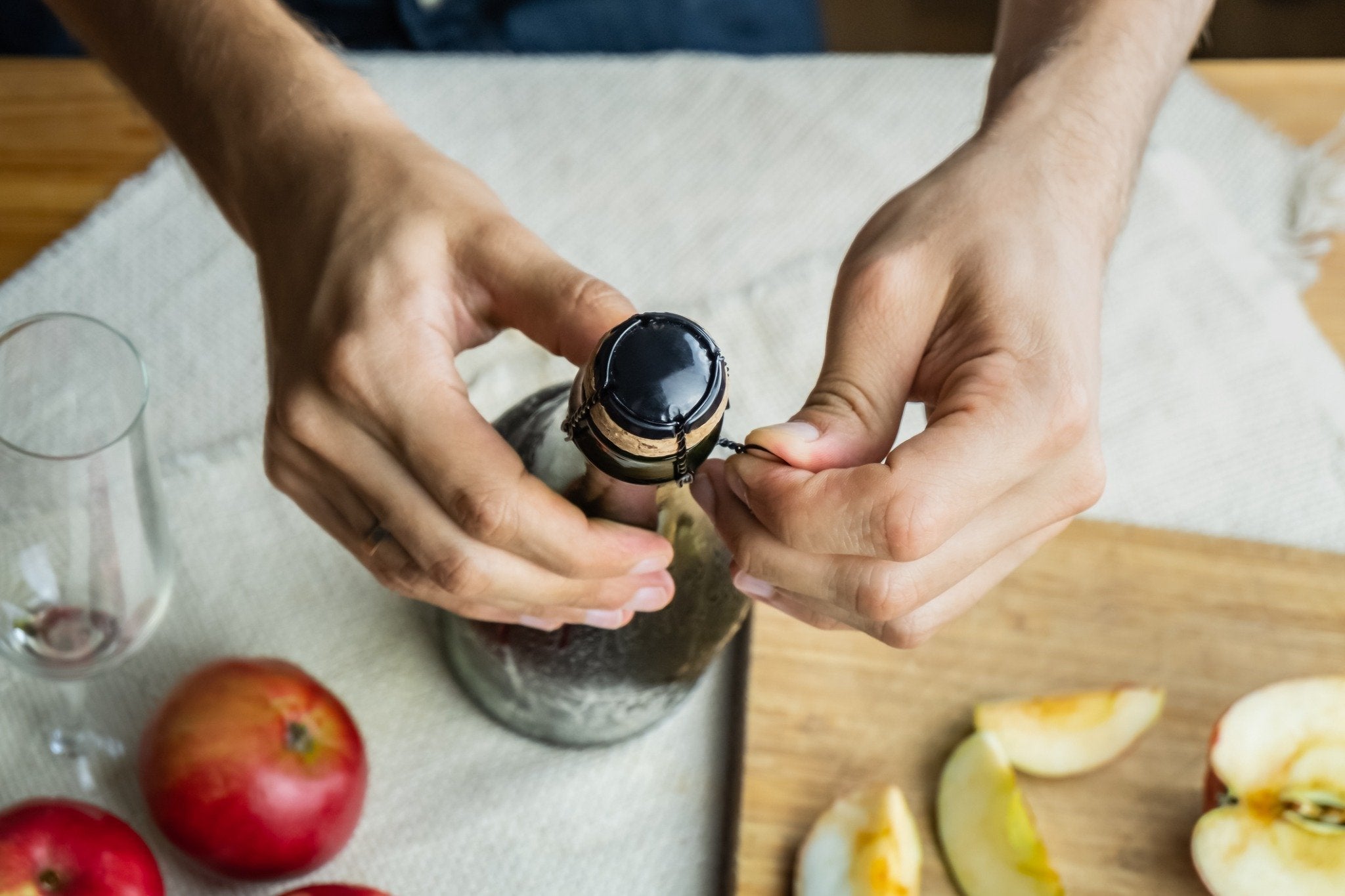
4. Untwist and Remove the Wire Cage
Count the twists
-
The cage is usually secured with 5–6 turns of wire.
Keep your thumb on the cork
-
Always hold the cork while loosening the cage to prevent accidents.
Untwist and lift off the cage
-
Turn the wire loop counter-clockwise until it loosens.
-
Gently remove the cage, keeping your hand over the cork at all times.
Secure your grip
-
Tilt the bottle 30–45° away from yourself and others.
-
Hold the base with one hand and keep firm pressure on the cork with the other.
5. Secure the Cork and Twist
Position your hands properly
-
Dominant hand: Grips the neck and rests thumb on cork.
-
Other hand: Supports the base of the bottle.
Twist the bottle, not the cork
-
Slowly turn the bottle while keeping the cork steady.
-
You’ll feel the cork begin to release with a soft hiss.
Ease the cork out gently
-
Avoid yanking or popping. Let the pressure release gradually.
-
Catch the cork in a towel if desired.
A quiet sigh is ideal
-
A gentle sound means you’ve opened the bottle correctly, preserving the wine’s bubbles.
6. Wipe the Bottle Lip
Clean the rim
-
Use a clean cloth to wipe away any residue or sediment.
Optional: Smell the cork
-
A fresh, yeasty aroma is a good sign. Musty smells could indicate spoilage, especially in older bottles.
7. Pour with Flair and Care
Use the right glass
-
Flutes preserve bubbles; tulip glasses enhance aromas.
Tilt the glass at a 45° angle
-
Pour slowly down the side to avoid losing bubbles.
Fill only ⅔ full
-
Leave space for mousse (froth) to rise.
Serve immediately
-
Sparkling wine is at its best right after opening.
8. Store Any Leftover Wine
Use a sparkling wine stopper
-
Plain corks won’t hold pressure. Use a clamping stopper for best results.
Store upright in the fridge
-
Avoid laying on its side. Store upright to maintain seal and reduce leaks.
Consume within 1–2 days
-
The wine will go flat after that time.
9. Troubleshooting Common Issues
Cork gets stuck inside the bottle
-
Use a Ah-So or Durand
-
Otherwise, use a corkscrew to carefully insert just one spiral turn and pull out the remaining cork very gently.
Foamy overflow
-
Caused by opening too warm or too quickly. Next time, chill the bottle more thoroughly and open slowly.
Cork crumbles
-
Rare with quality wines. Use a strainer or cheesecloth to filter the wine if needed.
10. Summary of Key Safety Tips
-
Always chill first – don’t open a warm bottle.
-
Point away from people – aim toward a blank wall or safe space.
-
Keep your thumb on the cork while removing the cage.
-
Twist the bottle, not the cork.
-
Listen for a soft hiss, not a loud pop.
-
Use a proper stopper if saving leftovers.
By following these steps—peeling the foil, removing the cage, securing the cork, and easing it out slowly—you’ll open your sparkling wine safely and gracefully, preserving its bubbles and flavor. Cheers!
If you're ready to sip away, take a look at our Sparkling Wines here!